
Lordrush
Century Games Innovation Pte. Ltd.Strategy
4.41.16K Reviews
- Version
- Varies With Device
- Installs
- 5.00M
- Age Rating
- Everyone
Screenshots

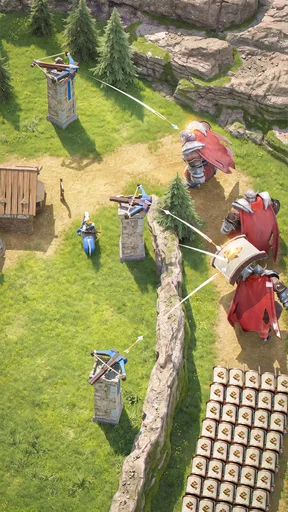

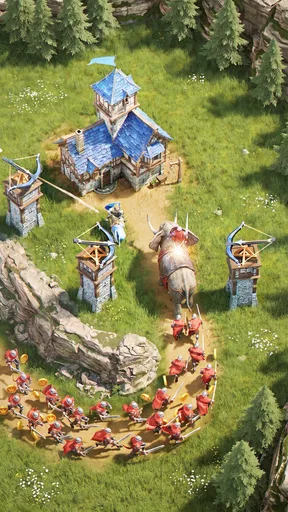
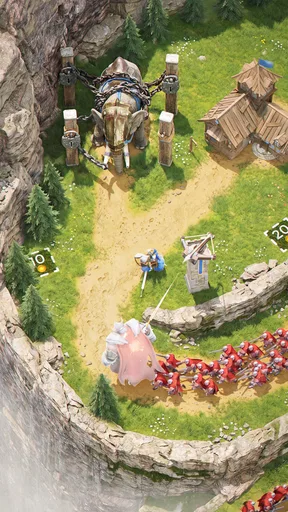
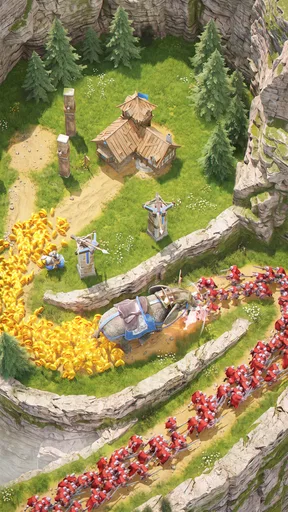
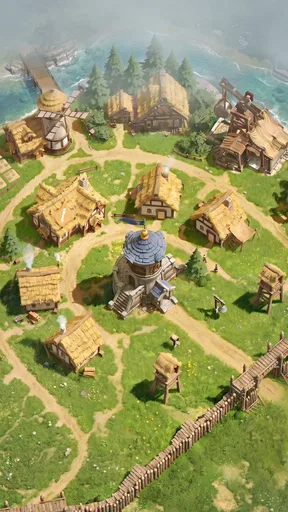
Our Review of Lordrush
 Analysis by Appyee
I spent time with Lordrush as a medieval strategy game built around tower defense, and my first impression was clear: it is aimed at players who enjoy making quick defensive decisions rather than simply watching a battlefield unfold. The free entry point makes it easy to try, while the medieval setting gives the familiar lane-defense format a more focused identity. I found it most appealing in short sessions, especially when I wanted a game that demanded attention without requiring the long commitment of a large strategy campaign.
The game comes from Century Games Innovation Pte. Ltd. and is listed for Everyone, so it is positioned as an accessible choice for a broad audience. It has reached over a million installs and holds a 4.4 average from around 40 thousand ratings, which suggests that the basic formula has found a sizeable audience. Those figures do not replace personal testing, of course, but they do make it easier to see Lordrush as an established option rather than an obscure experiment.
How Lordrush feels when you actually play
The central appeal is the constant balance between preparation and reaction. In a tower-defense game, placing a defensive unit is only the beginning. The real decision is whether to spend resources early for immediate safety, save them for a stronger response, or accept some pressure while building a better position. Lordrush works best when I treat each wave as a small planning problem instead of tapping through the action without a plan.
That medieval presentation matters because it gives the defensive task a recognizable sense of place. Fortifications, advancing enemies, and the pressure of protecting a route all fit naturally together. The game is not trying to be a broad kingdom-management simulator in the way some strategy titles are. Its focus is narrower and more practical: read the threat, shape the defense, and correct mistakes before they become impossible to recover from.
I recommend playing with short, deliberate sessions rather than rushing through every encounter. A useful habit is to watch the opening movement before spending everything. Early information can reveal whether the immediate threat is speed, volume, or a tougher target that will absorb attention. Even without overcomplicating the experience, this approach makes each placement feel intentional and helps avoid the common tower-defense mistake of building a visually impressive defense that is poorly suited to the next attack.
Free access and what the price really means
Lordrush is free to download, so there is no upfront purchase required to find out whether its style suits you. That is the most important value point here: you can test the core experience without committing money first. The game also includes in-app purchases ranging from $0.99 to $99.99 per item, so players should approach the optional spending with a clear personal limit.
I would not describe the free access as the same thing as unlimited value. A free game earns its place on my phone when the non-paying experience gives me enough room to learn the systems and decide whether I genuinely enjoy them. Lordrush is worth trying on that basis, but I would make any later purchase only after understanding exactly what it changes for my own play. The presence of a high-priced purchase tier means caution is sensible, particularly for younger players or anyone who tends to spend impulsively during a difficult stretch.
Because the game is rated Everyone, it is also the sort of title a family may consider sharing across devices. I would still treat the purchase settings seriously. An age rating describes the intended content audience, not a guarantee that every spending decision will feel appropriate for every household. If I were setting it up for a child, I would establish a clear rule about purchases before handing over the device.
The small decisions that make the difference
One of the more useful ways to approach Lordrush is to separate survival from perfection. Trying to build the ideal defense immediately can leave a player with no flexibility when the route changes in difficulty. I prefer a layered approach: establish enough protection to handle the first pressure, then keep some capacity available for the threat that has not appeared yet.
Another practical tip is to judge a defensive position by the amount of time it influences the route, not only by how powerful it looks in isolation. A placement that affects enemies across more of their journey can be more valuable than one that appears stronger but has a narrow opportunity to contribute. This is the kind of trade-off that makes tower defense satisfying: the strongest-looking option is not always the smartest one.
I also found it helpful to treat failed attempts as information rather than simply as losses. If a defense collapses, I would change one major decision on the next attempt instead of rebuilding everything randomly. That makes it easier to identify whether the problem was poor timing, an unbalanced layout, or spending too heavily too early. Players who enjoy learning through repetition will get more from the game than players who expect every encounter to be solved on the first try.
Where the experience fits into everyday play
A realistic use case is a short break during a commute, between appointments, or while waiting for dinner. Lordrush suits that moment better than a large real-time strategy game that expects a long uninterrupted session. I can open it with a simple goal—try a different defensive arrangement, improve a previous result, or get through a difficult section—and stop when the break ends.
That convenience has a trade-off. Short-session games can encourage repeated checking, especially when progress feels close. I would recommend deciding in advance how long I intend to play instead of letting one failed defense turn into an unplanned extended session. The game is more enjoyable when I use it as a focused puzzle rather than as background activity that constantly competes for attention.
It is also a reasonable pick for someone who likes strategy but does not want the complexity of a full empire-building game. There is less need to track a large economy, diplomacy, or a sprawling map. The concentration is on defense and timing. In exchange, players looking for deep political choices, open-ended exploration, or a long narrative campaign may find the scope too narrow.
How it compares with familiar strategy alternatives
Compared with a traditional real-time strategy game, Lordrush is easier to enter because the battlefield problem is more contained. I do not need to manage every part of an army, gather several types of resources at once, or worry about an opponent expanding across a large map. That makes it friendlier for quick play and for people who enjoy tactical decisions without a steep learning curve.
Compared with a pure puzzle game, however, it asks for more ongoing attention. A puzzle usually lets me study a fixed problem, while tower defense adds movement, timing, and pressure. I need to make decisions while the situation develops, and a good plan may still need adjustment. That combination is the main reason I would choose Lordrush over a slower logic game when I want something more active.
It also differs from a premium strategy title in the way I evaluate spending. With a paid game, I usually decide whether the complete package justifies the purchase before starting. Here, the free download lowers the barrier to entry, but the in-app purchase range means I should judge optional spending separately from the basic opportunity to play. For me, that makes the game easy to sample but not a reason to spend automatically.
What may frustrate experienced players
The focused format can become limiting if I want constant novelty from a strategy game. Tower defense depends on repeating a familiar cycle of placement, observation, adjustment, and replay. That loop can be rewarding when the challenge feels fair, but it may feel repetitive to anyone who prefers changing objectives or broad strategic freedom.
There is also a natural tension between experimentation and efficiency. I want to try unusual defensive choices, but difficult stages can encourage safer, more conservative play. If success depends too heavily on repeating the same reliable arrangement, the strategic space can feel smaller than it first appears. My advice is to decide what kind of enjoyment I am seeking: optimization and improvement, rather than unlimited creative freedom.
Another point is device compatibility. The game requires Android 7.0 or later, so anyone using an older Android phone should check that basic requirement before planning to play. On a supported device, the current version is 1.8.3, which is the version I would look for when checking that the installation is up to date.
I would also avoid treating the rating as a promise that I will personally love the game. A 4.4 average is encouraging, but strategy preferences vary widely. Some players enjoy repeating a stage until every decision is efficient; others want a game that constantly introduces new systems. Lordrush is much better suited to the first group.
Who should install it, and who should pass
I think Lordrush is a good match for someone who likes medieval themes, defensive planning, and games that can be played in compact bursts. It is especially suitable for a player who enjoys asking practical questions: where should I invest first, how much risk can I accept, and what should I keep in reserve? The free starting price makes it a low-risk way to test those preferences.
I would recommend it less strongly to players who dislike repetition or who want a strategy game with a large world and many independent systems. If I am looking for diplomacy, city design, open exploration, or a long story, I would choose a different category of game. Lordrush is not a substitute for every kind of strategy experience; its strength comes from keeping the objective focused.
Parents and younger players may appreciate the Everyone rating, but I would still make the purchase boundary explicit. The available items begin at $0.99 and extend to $99.99, which is a wide enough range that casual tapping should not be treated as harmless by default. The best family approach is simple: play the free portion first, discuss whether optional spending is allowed, and avoid confusing access to the game with a need to buy anything.
My final recommendation
After playing Lordrush, I see it as a straightforward, approachable medieval tower-defense game with enough tactical tension to reward attention. Its strongest value is the chance to begin for free and decide based on actual play rather than a required upfront purchase. I like the way it turns small choices about timing and placement into the main source of progress, and I think it works particularly well when I have only a short amount of time.
My reservation is not that the concept fails, but that its focused loop will not satisfy everyone. Players who enjoy refining defenses can find a comfortable rhythm here, while those who need constant variety may move on quickly. The in-app purchase range also means I would play with spending discipline instead of assuming that every optional item improves the experience enough to justify its cost.
My verdict: install it if you want a free, compact strategy challenge built around medieval tower defense, but skip it if you are searching for a broad campaign or a premium game with one fixed purchase. For the right player, Lordrush is easy to try, pleasant to revisit, and most rewarding when I approach each attack as a problem to solve rather than a wave to endure.
Privacy and Permissions
See what permissions an app requests and how it handles your data.
- Phone
- read phone status and identity
- Photos/Media/Files
- read the contents of your USB storage, modify or delete the contents of your USB storage
- Storage
- read the contents of your USB storage, modify or delete the contents of your USB storage
- Camera
- take pictures and videos
- Wi-Fi connection information
- view Wi-Fi connections
- Device ID & call information
- read phone status and identity
- Other
- view network connections, pair with Bluetooth devices, change network connectivity, full network access, change your audio settings, control vibration, prevent device from sleeping, Google Play license check, read Google service configuration
Verdict
Strengths of Lordrush
- Fast-paced battles are easy to start and finish in short sessions.
- Simple controls make the game accessible to new players.
- Character upgrades add a satisfying sense of long-term progression.
- Colorful visuals and effects keep combat engaging on mobile screens.
- Regular challenges can give returning players extra goals to pursue.
Limitations of Lordrush
- Progress may slow considerably without frequent play or resource spending.
- The interface can feel crowded during intense battles.
- Some upgrades require substantial grinding to unlock.
- Random rewards may make progression feel inconsistent at times.
- Battery usage can increase during longer gameplay sessions.
Other Releases by Century Games Innovation Pte. Ltd.
View All


Similar Picks in This Category
View All
Clash of Clans
Supercell4.5

Plants vs. Zombies™
ELECTRONIC ARTS3.7

Lords Mobile: Kingdom Wars
IGG.COM4.5

Clash Royale
Supercell4.4

State.io — Conquer the World
CASUAL AZUR GAMES4.1

Car Driving School : Car Games
Spark Game Studios3.9
Frequently Asked Questions
What is Lordrush and what kind of game is it?
Lordrush is a strategy-focused mobile game built around managing resources, developing your territory, recruiting units, and competing against other players or in-game challenges. The experience combines progression, tactical decisions, and battle preparation, so it is aimed at players who enjoy empire-building and competitive strategy rather than quick, one-tap gameplay. Before downloading, expect a game that rewards regular planning and upgrading.
Can Lordrush be played offline?
Lordrush may require an internet connection for important features, especially account access, cloud synchronization, online events, multiplayer battles, advertisements, and server-based progression. Even if some menus or limited activities appear accessible without a connection, the complete experience generally depends on being online. A stable Wi-Fi or mobile-data connection is recommended to prevent loading problems, lost progress, or interruptions during gameplay.
Is Lordrush free to download and play?
Lordrush can generally be downloaded without an upfront purchase, but free access does not necessarily mean that every feature is completely free. Like many mobile strategy games, it may include optional in-app purchases for resources, boosts, premium currency, cosmetic items, or faster progression. Players can usually begin without spending money, although advancing more quickly or competing at higher levels may encourage additional purchases.
Does Lordrush include multiplayer features or competitive gameplay?
Lordrush is designed with competition and interaction in mind, so players should expect features such as rankings, challenges, battles, alliances, or other online activities depending on the current version. These systems can add long-term motivation, but they may also make progression feel more demanding when facing experienced players. If you prefer completely relaxed solo games, review the available modes before committing significant time.
What devices are compatible with Lordrush, and is it suitable for children?
Compatibility depends on the specific Android or iOS version, available storage, operating-system requirements, and the developer’s latest updates. It is best to check the official store listing before installation. Parents should also review the game’s age rating, chat or social features, advertising, and in-app purchases. Strategy games can be appropriate for older children, but parental controls are recommended where spending or online interaction is available.
Play our best games!


